Kosher
Kosher is a process you can inspect, not a word on a banner.
Buyers in this trade are asked one question more than any other: where did the hair come from, and who says so. Our answer is a document, not an adjective.
What we document
- Origin on the specification sheet — the tier is named in writing, on the paper that ships with the order
- Batch record with the order — the material batch is recorded against the order number it is cut for
- QC checklist signed off before packing — length, density, cap and colour, item by item
- Written quotation before production — density, length and colour fixed in writing, not agreed verbally
- Sample evaluation before a bulk commitment — the piece is felt before the run, not after
What we will not claim
- That an order is "certified kosher" unless the documentation for that specific order supports it
- European origin for Chinese hair, or the reverse, in writing or in speech
- That two tiers have been blended in one piece — they are not
- A certification we have not been issued
Rabbinic supervision
A supervising rabbi inspects the raw hair on the sorting floor before it is processed, and the finished pieces before they are packed. The photographs below are from a recent inspection — the same rooms your order passes through.
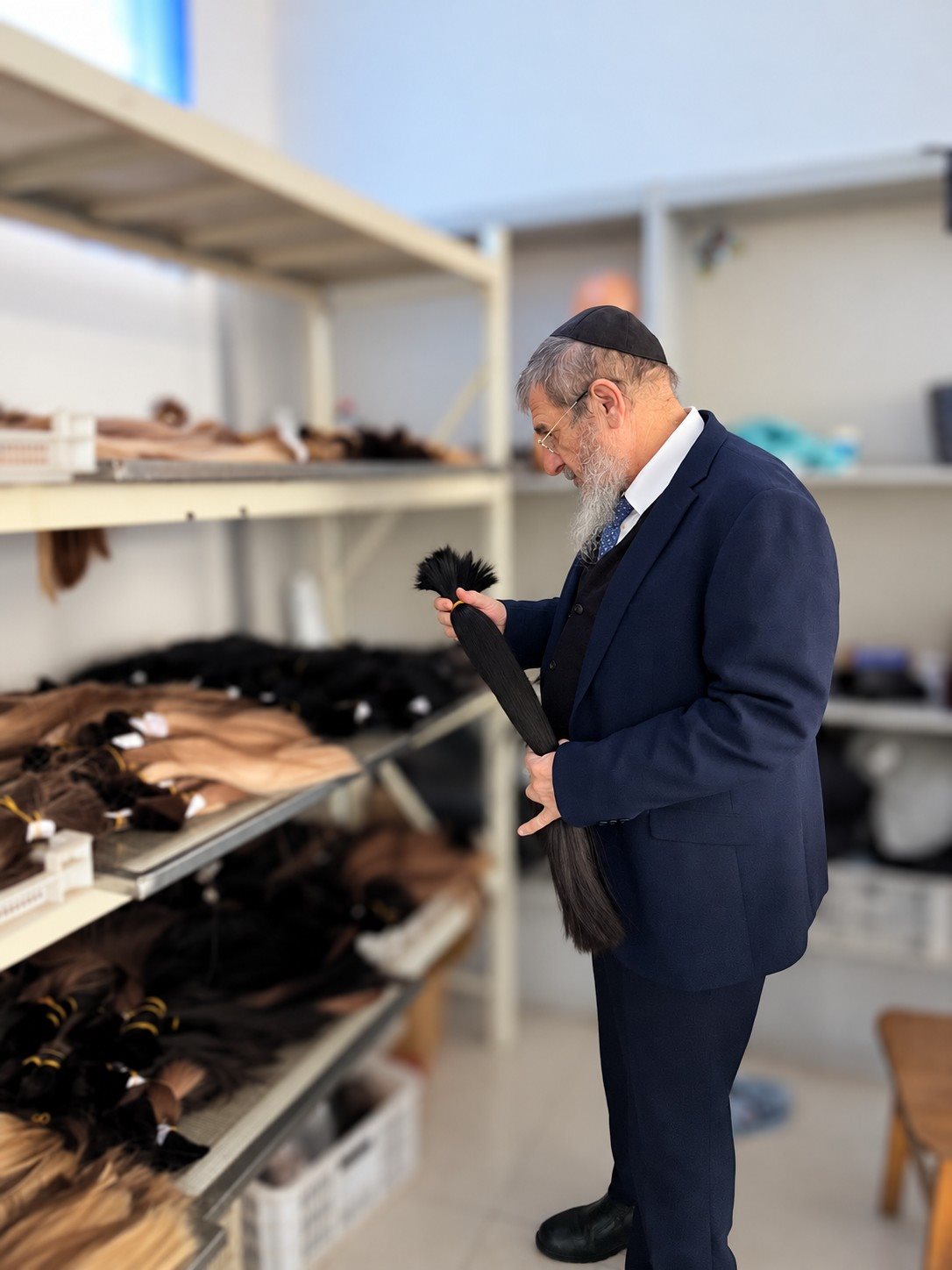
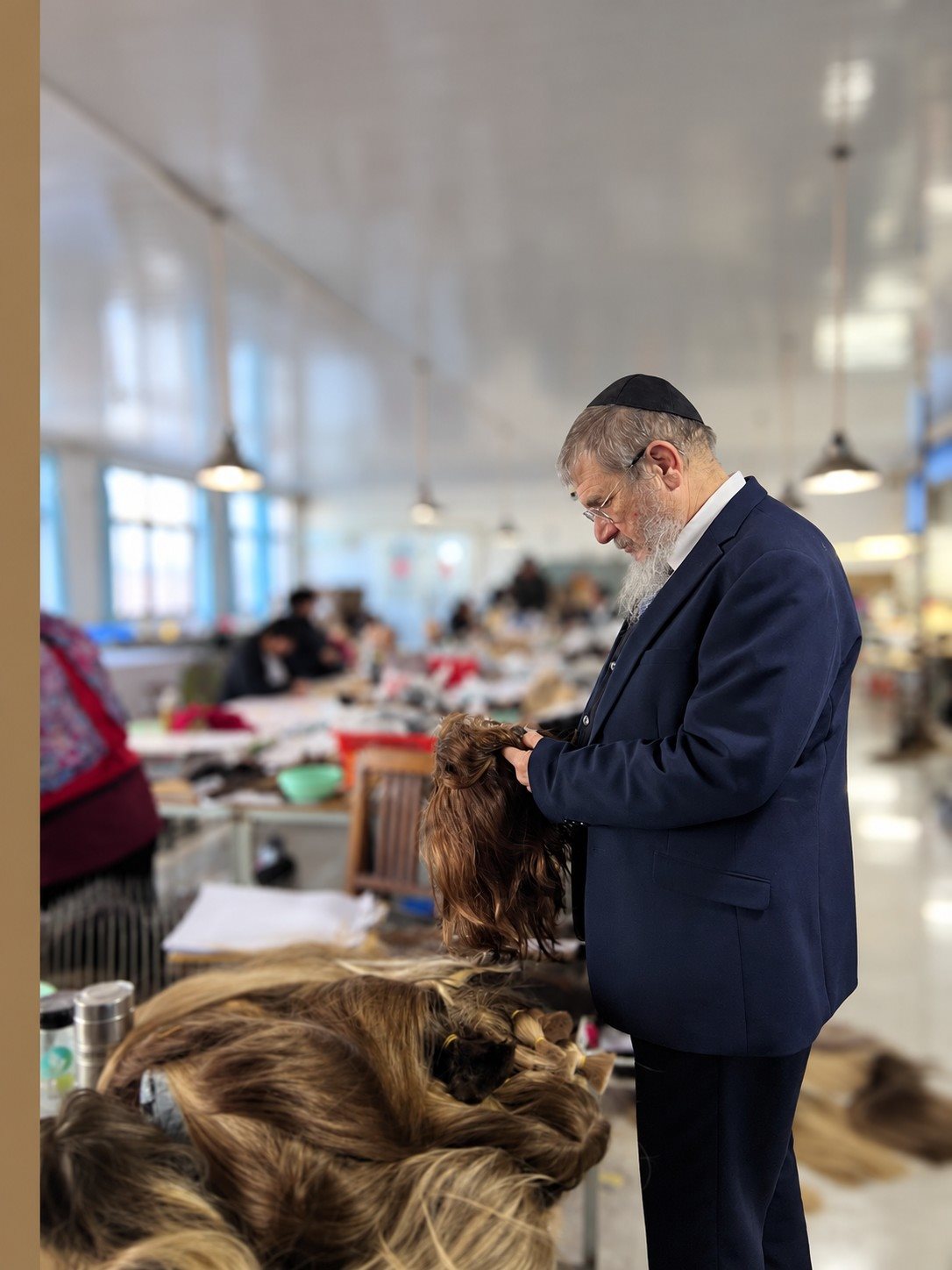
Ask for the current supervision documentation with your quotation. We confirm in writing what applies to your order before production starts.
Why we write it this way
Because the alternative is worse. A supplier who prints "100% kosher" on every page gives a buyer nothing they can check, and puts the risk on the buyer's reputation rather than the supplier's. A specification sheet that names the origin, the batch and the construction is checkable — by you, by your client, and by anyone your client asks.